Design Insight: Preparing for your Web Project


advice

Here’s the scenario. You run a small business start up and realize you  really need to get a website.  Or,  you run a small business and realize your website is really dated. You have little to no knowledge of how this whole website and Internet thing works.  Your heart pounds at the thought of blowing your budget.  You get frantic thinking about how your going to find the time to make this happen.

What you need is stiff drink.

Actually, No. What your really need is  some insight into preparing for a web design project in order for you to  make the most of your design consultation and ultimately, make the most of your Internet marketing.

Here are 5 initial steps you can take before you even pick up the phone to book a consult.


Step 1

Evaluate your current branding. Are you happy with it?  Have you had someone with design or marketing expertise provide you some feedback?  No sense in spending the money on a website if your a) not happy with your current branding  or b) unsure of your current branding.  Websites are one of the bigger start-up expenses, don’t waste your money designing around a low budget logo or an outdated logo. Search Go Daddy and see what’s available in terms of domain names that you would consider. Make sure your current branding is going to translate well on the Internet, and if your unsure then hire  your designer or a consultant to review it.

Step 2

Decide on your online marketing goals.  It could be as simple as having a website to direct people to – what I would consider to be the bare minimum of Internet marketing. Yes, it’s an important reason to build a website and  without a doubt, all small businesses need a website. However, taking your business online gives you plenty of varied marketing opportunities, and taking advantage of these can make your website pack a bigger punch.   Yes, you can tell people about your website, but nowadays, business are succeeding online because they’ve got good content and it’s being shared in social media.   My advice? At minimum, you should invest in setting up a good Facebook page and learning how to use it.  Next, consider Twitter to build connections, You Tube for video marketing and Pinterest if you and your content are visual.

Step 3

If you don’t already have tag lines and marketing materials, start brainstorming. Websites are a combination of visuals,  calls to action and tag lines as well as written copy.  You need some kind of marketing direction.  If you don’t have a plan and you don’t think you can create one on your own,  then schedule an extra consult with your designer or someone who can help you create your plan.

Step 4

Gather all your materials in preparation for your initial consult with your web designer and have it ready to hand over in digital form.

  • Headshots and Photography
  • Contact information: phone, mailing, emails
  • copy written material- information about you/your business,  welcome and introduction text, and information about products or services relating to your business
  • tag lines and calls to action
  • key words and key phrases related to your business

With all this information, your and your designer will be able to decide on aspects of your website including construction, outline and navigation. Prepare to discuss with your designer other functions that may be of value to visitors on your website including downloadable information, booking services, contact forms etc.

Step 5

Get inspired.  Look at other websites and not just those in your business niche. Let your designer know which sites you like and which ones you don’t and be prepared to explain why.  Your designer will want to get some insight into your vision.

check back for more Design Insights coming soon.


The Importance of ENOUGH Website Content

If you don’t have good, quality content on your website- that is the copy (the words written), photos and/or video,  interactive widgets and social media plugins -  then your wasting  your cyberspace.

But equally important to quality of content is having enough content to fill up the pages of your website.

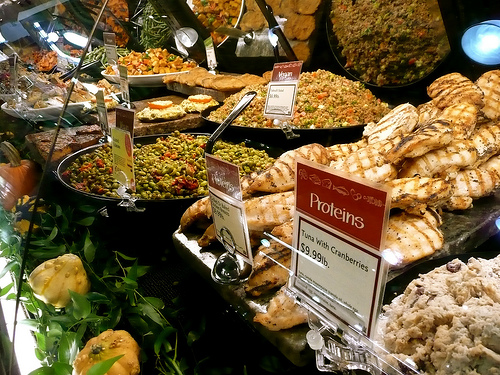
Whole Foods deli counter
photo credit Scorpions and Centaurs via Flickr

A classic example of where content is key is at your local deli counter.  A deli counter must be full to be marketable. It doesn’t have to be big, is just has to be full.  If your looking through the glass at all that food, you want to see bowls filled to the brim all alongside cheese and sausage neatly packed together.  You may not be conscious that you want to see this, but if has been proven over and over again that customers buy from a full deli counter.

Ever been to a sparse deli counter?  I have, and the first thing I think is …how fresh is that food? Then, being the finicky person I am,  I walk on by.

And just like that, your finicky website visitors will click away from your website if it looks too sparse.

Your website is the same. Each  page must be full to the brim with content (not spilling over the sides, but full). I have clients who have big plans for the future of their websites, and that is fantastic. But if they don’t have the content to support it now, I tell them to leave it for later: ie.  don’t even think about publishing a page that says “coming soon”.  Publish what you have, and don’t spread it thin.

Keep your pages full like the case at the deli counter and have customers (or visitors) buy into your website.

© Copyright Walker Park Media | Web Design Services - Designed by Us